How it works
The whole journey, in order
Seven screens, and this is what each one is for — from the first egg to the game at the end.
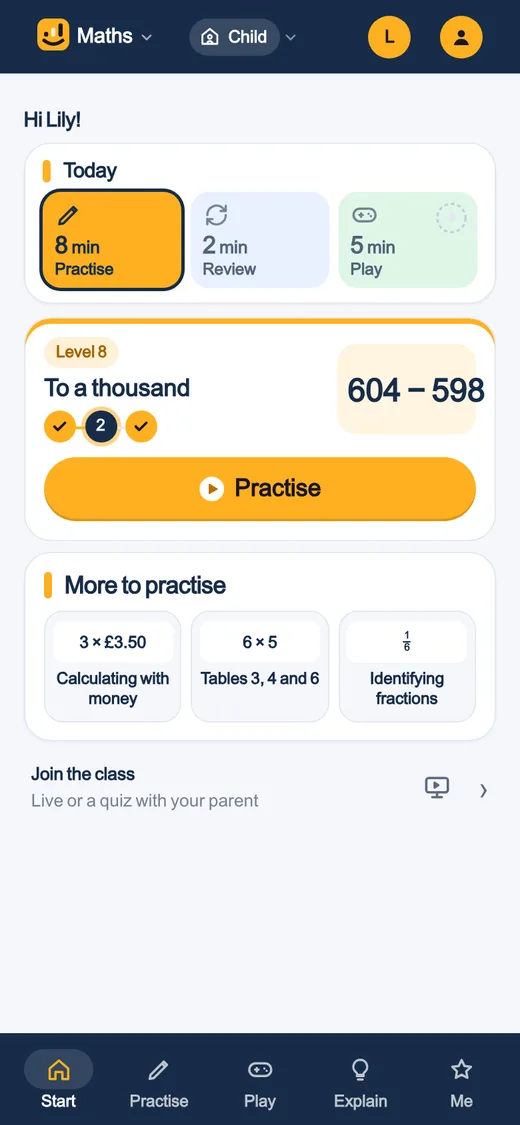
You startOne animal, one name, one world. That takes a minute, once. 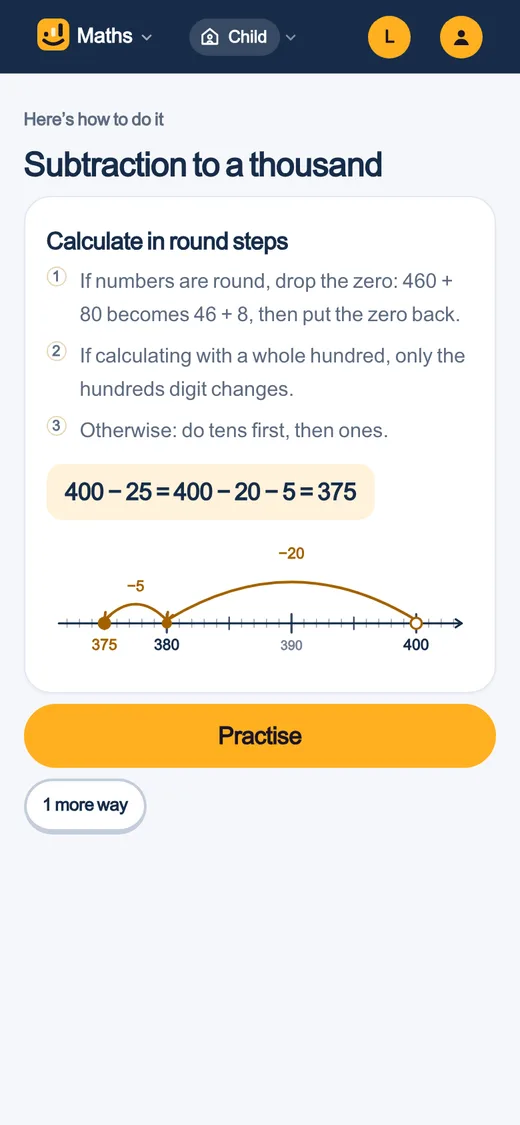
The approachEvery question comes with a strategy — never a bare sum with nothing to hold onto. 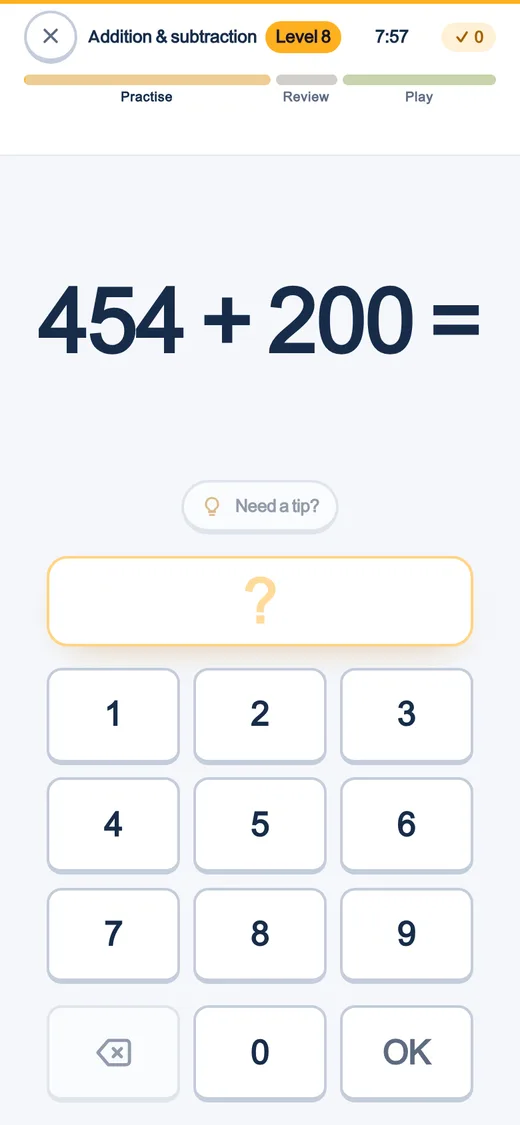
You practiseOne question at a time, calm and large. Your child types or taps the answer themselves; no multiple choice anywhere. 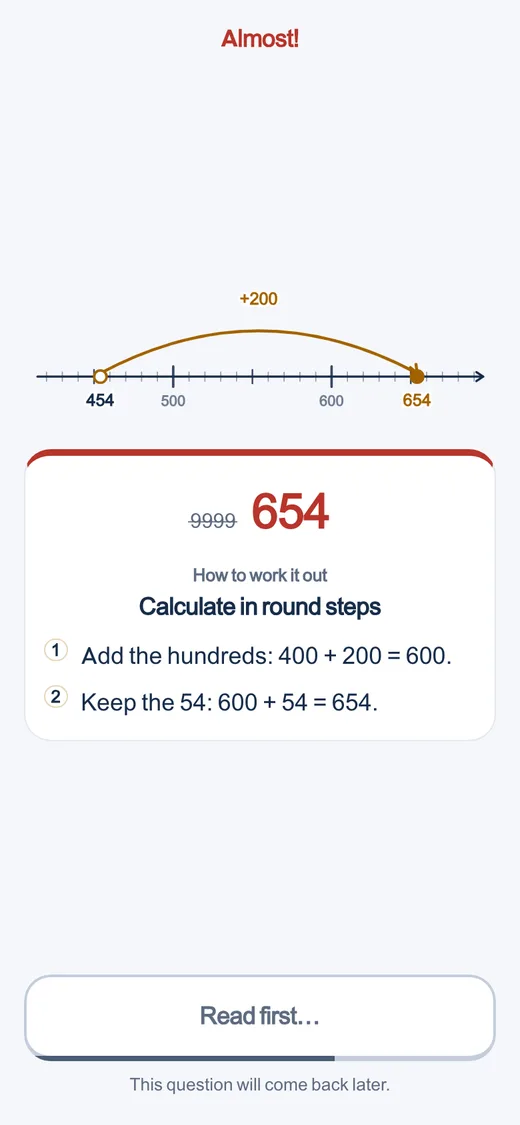
A mistakeThe screen turns, the right answer appears with the reasoning, and that question comes back later. 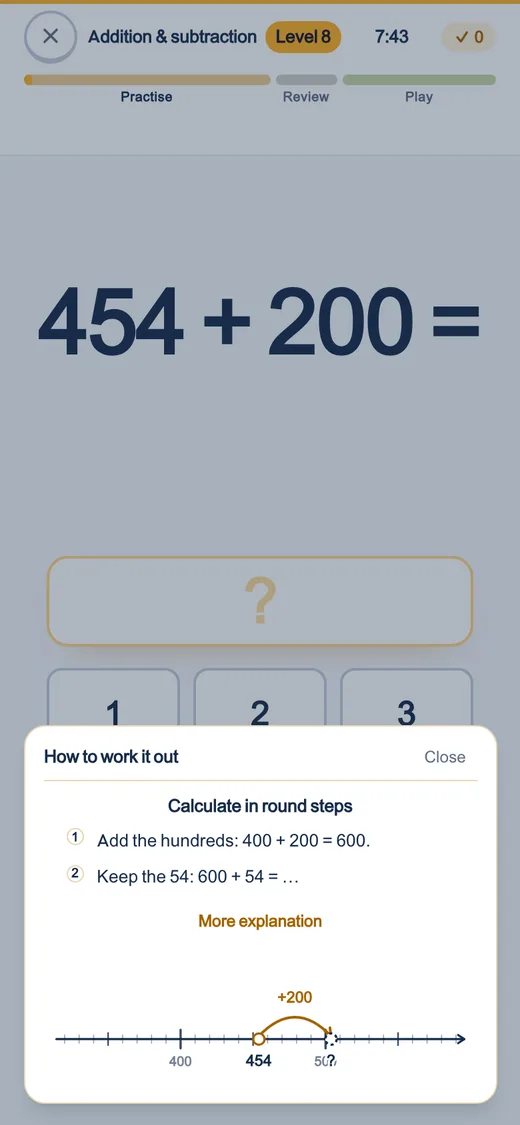
A step in betweenStuck? A worked step appears — never the answer itself. 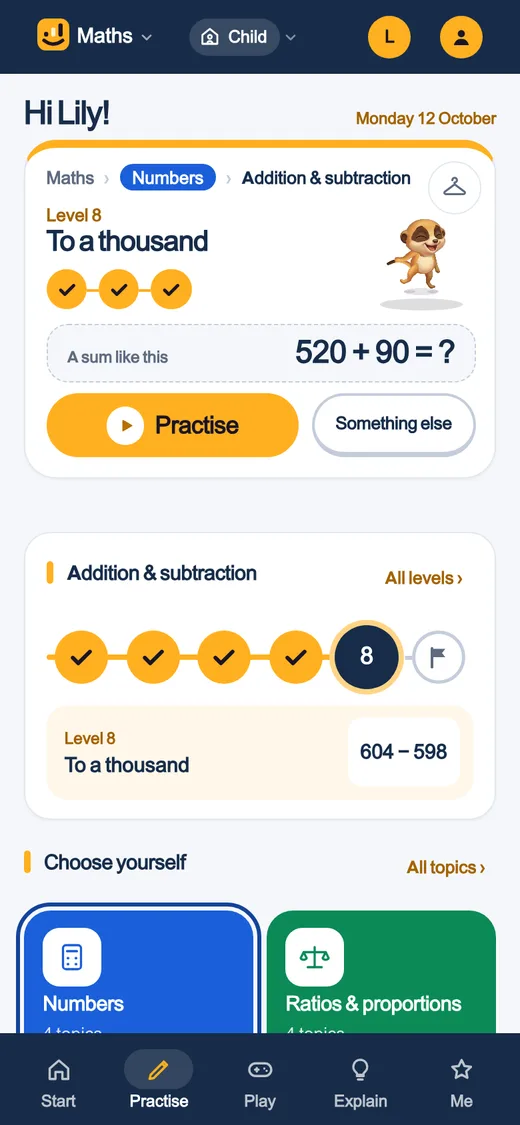
Your pathWhere you stand, what is next, and what you already know by heart. 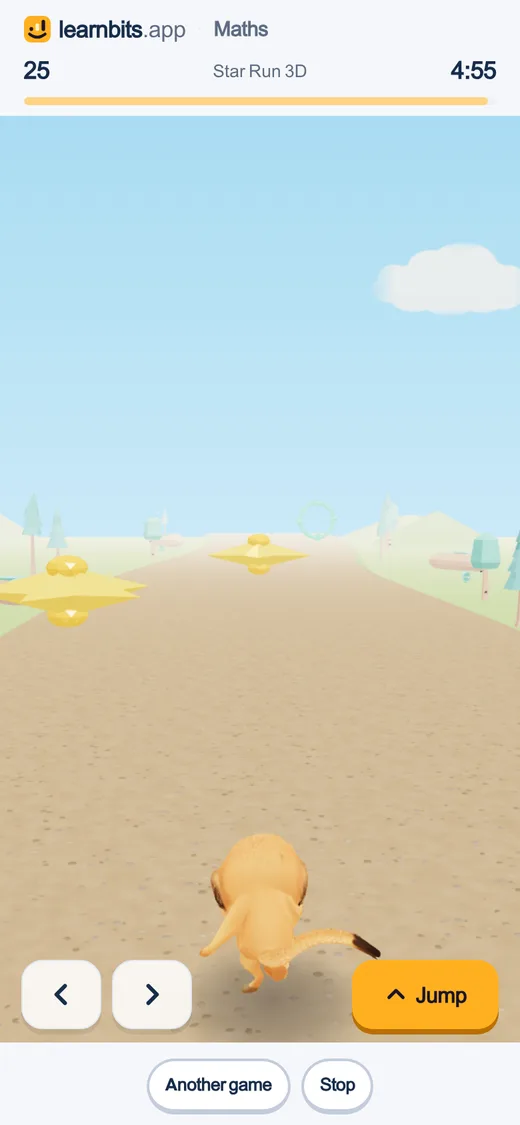
You playOne coin buys one game — your own animal is in it.
The session
Not a number of questions — a time
A row of fifteen sums can be rattled through; 8 minutes cannot, because answering faster does not finish it any sooner.
8 min · Practise
Focused, adaptive — what is not yet automatic.
2 min · Review
Mixed through, over everything ever practised.
5 min · Play
Earned, five minutes, one game per coin.
Repeats up to 3 times a day, then the app locks until tomorrow.
The heatmap
From working it out to knowing it
Every fact climbs the same ladder. Nothing turns green on luck: it takes real accuracy, and an answer faster than a few seconds.
Neither a parent nor a teacher ever sees this ladder as a grade — it decides which question comes next, and nothing else. The full argument, with its sources, is on the evidence page.
The placement test
A few questions find the right level
A choice, not a gate: anyone who does not know where to start takes a short opening round per area. 5 questions from every topic, mixed, then a few more that follow how it goes — at most 15 in total. The app then moves the child a step up or down, with one line of explanation why. Without the test, your child simply starts at the step they chose or that was set for them.
The engine
Every answer adjusts the level
Underneath the colour, a model tracks how likely it is that a fact is known and how likely it is that it is remembered instantly, and it moves a step up or down per learning line with every answer — how fast, how often right, and which in-between step still catches. It never changes the colour itself: that keeps counting the same three plain numbers a parent and a teacher see.
The arcade
Rest, not another lesson
Every game is open to look at, always. The lock sits on the start button, not on the cupboard: you need one coin, and one coin buys 5 minutes.
The super coin
Earned by turning up, not by being right
5 days in a row, at least once, and there is a super coin — it opens the one game built in 3D. It does not stack, and it rewards showing up, never being right.
Live
The same practice, together on a board
A teacher — or a parent, at home — can put a game on a shared board: a race, a mountain, a gold hunt. Every child still answers with their own sums, at their own level, on their own laptop; the board only turns that into a shared spectacle, with items and a final lap, never a leaderboard of who is best. What is practised folds into the same heatmap as any other session.
The material is never "done"
This product automates and maintains: the review keeps returning to everything once practised, and a part called "done" is a part a child never comes back to. So nothing here ever says "done" about the material — the measure is what you know by heart.
- No leaderboard, no comparison with other children.
- No score — a position: what is automatic, what is not yet.
- The streak counts turning up, not being right.